You've just paid €28 to "neutralise" a return flight to Lisbon. The confirmation email lands, a tree appears on a map somewhere in Kenya, and you feel... what exactly? Relief? Or the quiet suspicion that you've bought an indulgence rather than done something real?
That discomfort is worth taking seriously. Carbon offsetting for individuals is one of those rare products where the marketing is smooth and the mechanics are genuinely complicated. It can be a useful tool. It can also be a way of paying to feel better while changing nothing. The difference between those two outcomes comes down to how you use it — and what you expect it to do.
Here's what I've learned from buying offsets myself, reading the certification documents nobody reads, and watching friends get burned by projects that quietly collapsed.
Key Takeaways
- One carbon credit equals one tonne of CO₂e — and for a typical European household, the offsettable slice is often smaller than people assume.
- Offsets work best as a last step after reduction, never as a substitute for it.
- Certification labels (Gold Standard, Verra's VCS) are a starting filter, not a guarantee.
- Prices per tonne range wildly, from a few euros to well over €100 — cheap credits usually signal weak verification.
- Additionality and permanence are the two questions that decide whether your money did anything.
- Carbon farming offsets carry a specific risk profile that individuals rarely hear about.
Carbon offsetting for individuals: what you are actually buying
A carbon offset is a financial claim on a future or past reduction of greenhouse gas. You pay money; someone else — a project developer, a cooperative, a cookstove distributor — avoids or removes a quantity of CO₂e that is then "retired" on your behalf. One credit, one tonne.
The mechanism is simple. The accounting is not. When you buy a credit, you're trusting a chain: the project developer's measurement, the auditor's verification, the registry's bookkeeping, and the certifier's willingness to police all three. Break any link and the tonne you paid for may not exist in any meaningful sense.
What one tonne actually looks like for a household
Most people I talk to assume they emit "a few tonnes" and are startled by the real shape of it. A household in Western Europe typically sits somewhere in the range of 6 to 12 tonnes of CO₂e per year depending on heating, car use, flights and diet — with the upper end reserved for frequent flyers and large, poorly insulated homes. But the fraction of that which is credibly offsettable is much smaller than the total.
You can't offset your way out of a gas boiler. You can offset the residual — the flight you had to take, the kilometres you couldn't avoid. Think of the offsettable slice as the last 10-20% of your footprint, not the whole thing.
The price question nobody answers straight
Ask "how much does offsetting cost?" and you'll get a range so wide it's useless unless you know what drives it. Low-end credits trade for a handful of euros per tonne. High-integrity removal projects — direct air capture, carefully monitored reforestation with long-term covenants — routinely clear €80-150 per tonne, and some go far beyond that.
The spread isn't random. It tracks verification cost, project type, and how long the carbon is actually kept out of the atmosphere. A cheap credit is cheap because something in the chain is being taken on trust.
The real benefits of offsetting as an individual
Let's be fair to the tool. Offsetting has genuine advantages, and dismissing it entirely is as lazy as treating it as a cure.
It prices something that was free
The strongest argument for offsetting is psychological and economic at once: it puts a number on an externality that our daily decisions otherwise hide. When a flight costs €40 more because you've offset it, you start to feel the weight of the choice. That feedback loop changes behaviour over time. I've watched it change mine — the offset line item made me book one fewer trip the following year, not more.
It moves money to places that need it
Well-run projects fund cookstoves, methane capture, and forest protection in regions where public climate finance is thin. A household budget of €100-200 a year sounds trivial next to industrial emissions, but pooled across millions of buyers it becomes real capital for project developers who otherwise can't get financed.
What are the benefits of a carbon footprint?
A carbon footprint's main benefit is diagnostic, not moral: it tells you where your emissions actually concentrate, which is usually a small number of decisions rather than a hundred small ones. Flights, heating, and car travel tend to dominate. Once you see that distribution, you can direct effort where it pays — and stop agonising over plastic bags. The footprint is a map, not a verdict.
The disadvantages nobody puts on the landing page
This is where the honest part starts.
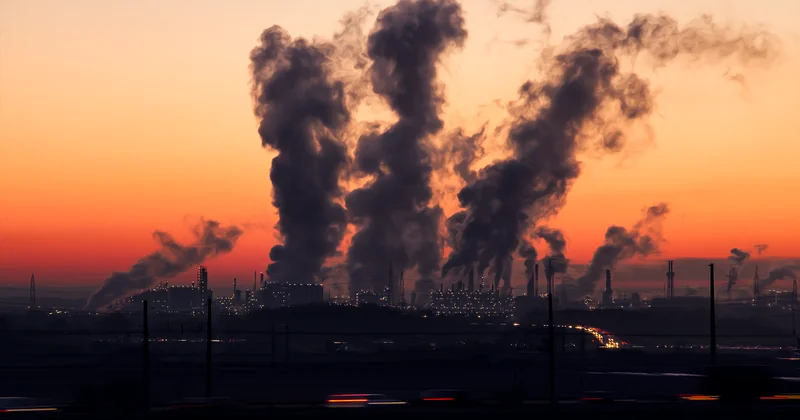
Additionality: the question that breaks most projects
Additionality asks a brutal question: would this reduction have happened anyway, without your money? If a forest was already protected by law, paying to "protect" it changes nothing. If a solar farm was already profitable, your credit subsidised a business decision that was going to be made regardless. A meaningful share of legacy credits have been criticised on exactly this basis, and the credibility of several large-scale forest schemes has taken visible damage as a result.
For an individual buyer, this is the hardest thing to verify. You are, in practice, trusting the certifier. That's a real weakness, not a footnote.
Permanence, and the fires
A tree that burns releases its carbon back. A forest protected for ten years and cleared in year eleven has delivered nothing durable. Permanence risk is why removal projects with long monitoring covenants cost more — and why cheap forestry credits deserve suspicion.
The distraction problem
My honest opinion: the biggest risk of offsetting isn't fraud, it's moral licensing. Paying €50 feels like an action. It isn't a substitute for taking one fewer flight, and treating it as one is where the whole thing goes wrong. If your offset budget is growing while your emissions stay flat, you've bought a feeling, not a reduction.
What may be a disadvantage of carbon farming?
The main disadvantage of carbon farming is measurement and reversibility: soil carbon is hard to quantify accurately, varies field by field, and can be released again if land management changes or drought hits. Verification costs are high relative to the modest per-hectare gains, and long-term monitoring is difficult to enforce when a farm changes hands. The result is credits that look attractive on price and fragile on delivery.
How to choose a credit without getting fooled
Practical filters, in the order I'd apply them.
- Check the registry, not the website. The project should have a public ID you can look up independently.
- Read the methodology summary. If it's not published, walk away.
- Prefer projects with explicit permanence buffers and long monitoring periods.
- Be sceptical of anything priced under roughly €5 per tonne unless you can explain to yourself why it's that cheap.
- Look for co-benefits you can verify — not just claimed.
A comparison that matters
| Credit type | Typical price band | Verification strength | Main risk |
|---|---|---|---|
| Avoided deforestation (legacy) | Low | Contested | Additionality |
| Cookstoves / efficiency | Low to mid | Moderate | Usage assumptions |
| Reforestation with covenants | Mid to high | Good | Permanence, fire |
| Soil carbon / carbon farming | Mid | Weak to moderate | Measurement, reversal |
| Engineered removal (DAC) | Very high | Strong | Cost, scale |
The celebrity question, and what it teaches
People ask me about this constantly, and the honest answer is instructive.
Did Taylor Swift buy carbon offsets?
Yes — her private jet travel has been reported as offset through purchased credits, and the practice has been publicly discussed in coverage of her touring emissions. The lesson for individuals isn't about her. It's that buying offsets for high-emission activity is exactly the scenario where the "distraction" critique bites hardest: the offset exists alongside the emission, not instead of it, and whether that's defensible depends entirely on whether the reduction effort is real and separately documented.
So should you offset?
Yes, but as the last line of your climate budget rather than the first. Reduce what you can measure, then offset the residual with a project whose documentation you've actually opened.
And here's the thought I'd leave you with. The most useful thing offsetting ever did for me wasn't the tonnes. It was the moment I realised I could name, precisely, what my year of flying cost in carbon — and that I had been avoiding the number for years. The number is still there whether or not you pay someone to look after it.