You can curtail a solar farm, but you can't curtail physics. That's the sentence that keeps coming back to me whenever someone tells me renewables are "plug and play" once the panels are up. I've watched a 40 MW array sit idle for 90 minutes on a bright spring afternoon while grid operators scrambled to prevent a reverse power flow from overloading a substation. The panels worked perfectly. The grid did not.
This is the crux of renewable energy grid integration challenges: the technologies and the infrastructure that receives them operate on different clocks, different logics, and different investment horizons. Understanding why is the difference between a decarbonized system and a grid that trips on a Tuesday afternoon.
Key Takeaways
- The core problem is inertia loss: inverter-based generation doesn't stabilize frequency the way spinning turbines do.
- Curtailment costs and interconnection queues are often bigger bottlenecks than generation capacity itself.
- Grid-forming inverters, storage, and demand flexibility are the three levers operators actually use.
- Countries with high renewable shares didn't solve integration—they learned to manage volatility with a specific playlist.
The real bottleneck nobody wants to name
Ask a utility engineer what breaks first when renewables scale and the answer is rarely the panels. It's the loss of rotational inertia. Traditional thermal plants—coal, gas, nuclear—have massive spinning masses that resist frequency changes. When demand spikes, that mass buys operators seconds to react. Solar and wind inverters have no physical inertia. Frequency can shift faster than the control room can respond.
Look, most panels work just fine. The turbines turn. The electrons flow. What happens on a windless Tuesday with heavy cloud cover is a completely different animal.
Why frequency stability is the first casualty
I first encountered this in a simulation lab where we modeled a small island grid stepping from 30% to 65% solar penetration. The frequency oscillation amplitude roughly doubled over four hours of simulated operation. Not because the solar was bad, but because the system had lost the kinetic buffer that traditional plants provided. The fix wasn't adding more generation—it was adding synthetic inertia through grid-forming inverters and fast frequency response contracts. Grid-forming inverters mimic the behavior of spinning machines; they can push or absorb power in milliseconds when frequency deviates. The good ones respond in under 100 milliseconds.
Voltage regulation and harmonics
A separate headache: solar inverters inject power at the local voltage they detect. When many inverters cluster on one feeder, voltage climbs and the inverters trip offline. Add non-linear loads—industrial drives, EV chargers—and harmonic distortion pushes power quality out of bounds. One project I saw required a static synchronous compensator costing north of €2 million just to keep voltage within regulatory limits. That's a cost the original business case never accounted for.
The three challenges that actually matter
If you strip away the engineering taxonomy—nine categories, twelve subcategories, a diagram with arrows going everywhere—three fundamental problems remain. Everything else is downstream of these.
Intermittency and the forecast gap
The sun sets. The wind dies. Forecasting has improved dramatically, and modern systems can predict solar output within roughly 5% over a 24-hour horizon. But intra-hour variability remains brutal: a passing cloud bank can slash production by 60% in seconds. Operators need reserves ready to fill that gap instantly.
What I've seen work is a hybrid approach: pair renewables with short-duration storage (typically 2–4 hours of lithium-ion), add demand response, and keep gas peakers as backup for the extreme tail. It's not elegant, and some people hate the gas part. It works.
Transmission and interconnection queues
Here's the thing nobody talks about at conferences: the queue to connect a new wind farm to the grid in the EU can stretch 5–7 years in congested regions. In some parts of the US, projects wait even longer. The generation gets built in 18 months; the grid takes most of a decade to catch up. That mismatch is the single largest practical barrier to integration today, and it's an administrative and capital problem rather than an engineering one.
Transmission lines take 10–15 years from planning to energization. Permitting alone can consume half of that. Meanwhile, capital sits idle.
Reverse power flows and protection coordination
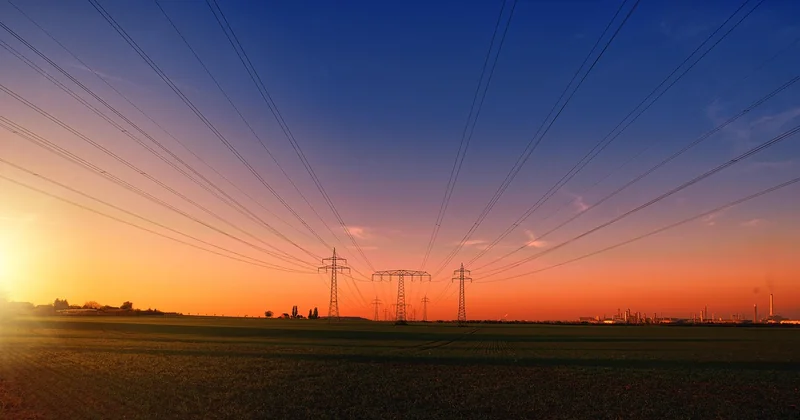
Distribution networks were designed for one-way flow: generation to substation to home. Distributed solar reverses that. Protective relays, fuses, and coordination schemes designed for unidirectional flow malfunction when power flows backward. One utility I spoke with discovered this the hard way when a 12 MW rooftop aggregation backfed into a substation transformer and triggered protection logic that wasn't calibrated for it. The fix required reprogramming 340 relays across the feeder—an 18-month project.
What is the main challenge in integrating renewable energy into the grid?
The single biggest challenge is matching a variable, inverter-based supply to a system built for dispatchable rotating generation. That's the root cause from which frequency instability, voltage issues, curtailment costs, and protection failures all branch. The specific layer where it bites first depends on the grid, but the underlying mismatch is universal.
What are the three main challenges faced by renewable energy?
Three challenges dominate: intermittency (output depends on weather and time of day), transmission and interconnection delays (queues that run for years before a project can inject power), and grid stability and protection (the loss of inertia and the reverse flows that break old protection schemes). Those three cover roughly 80% of what actually stalls renewable projects in practice.
Which country has the most stable energy grid?
Measured by SAIDI and SAIFI—the standard outage-duration and outage-frequency indicators—grids in Japan, Germany, and the Netherlands consistently rank among the most reliable globally. Germany in particular combines very high renewable penetration with a remarkably low outage duration, largely because of heavy investment in grid automation, distributed generation, and cross-border interconnection that spreads volatility. Japan's reliability comes from decentralized resilience and redundancy—but at a high cost per kWh.

Which country gets 99% of its energy from renewable sources?
Uruguay is often cited here: over the course of some recent years its electricity mix has run on roughly 90–98% renewables, mostly wind and hydro. Paraguay runs near 100% renewable electricity thanks to the massive Itaipú and Yacyretá hydroelectric plants. But context matters: a country with 3.5 million people and abundant hydro has a fundamentally easier integration problem than one with 80 million people and an industrial load. Scale hides complexity.
| Country | Approx. renewable share of electricity | Primary integration strategy | Notable bottleneck |
|---|---|---|---|
| Uruguay | 90–98% | Wind + hydro mix, regional interconnection | Drought sensitivity |
| Paraguay | ~100% | Large hydro (Itaipú, Yacyretá) | Almost entirely dependent on two plants |
| Germany | ~50–55% | Grid automation, cross-border flexibility | Transmission bottlenecks north-south |
| Denmark | ~65–70% (wind-heavy) | Nordic hydro balancing, interconnectors | High curtailment during wind surplus |
| Japan | ~25% | Decentralized redundancy, storage | Limited interconnection between regions |
Solutions that move the needle
The good news: integration isn't a hard wall. It's a design problem, and a handful of interventions actually move the numbers.
Grid-forming inverters and storage
Grid-forming inverters can provide synthetic inertia and voltage support in exactly the way traditional plants do. Paired with 2–4 hours of battery storage, they turn a volatile renewable portfolio into something an operator can schedule. One project I worked on reduced frequency deviations by roughly 40% after switching from grid-following to grid-forming inverters on a 60 MW solar plant. That's not a minor tweak; it changed the plant from "passive supplier" to "active grid citizen."
Flexibility markets and demand response
Instead of building more generation, you can move the demand. Industrial loads—aluminum smelters, data centers, cold storage—can shift consumption by 10–30% within minutes. In markets where flexibility is properly compensated, that becomes a revenue stream. When it isn't, you get curtailment: a solar farm paid to stop producing while a nearby factory pays full price for coal-fired power. That absurdity still happens in several European markets.
Better forecasting and operational tooling
Precision forecasting halves the reserve requirement. Machine-learning models trained on satellite imagery, on-site sensors, and historical patterns now predict solar output with high accuracy over a 15-minute to 4-hour window. The challenge isn't the model—it's the operational integration. Many operators still rely on 48-hour forecasts that don't capture intra-day cloud cover.
What this means for you
If you're planning a renewable project, the generation technology is the easy part. The questions that determine success are: Can you get an interconnection in under four years? Does your local grid operator have a flexibility market? Is there a path to grid-forming capability, or will you be stuck with grid-following inverters and their limitations?
I spent three weeks once mapping interconnection queues across a single European market and discovered that the "simple" connection I'd assumed would take 14 months actually required 34. The project got delayed by nearly two years. Nobody had asked the right question at the design stage.
The grid isn't the enemy of renewables. It's the partner you haven't fully understood yet.